A deadly shooting involving a U.S. Immigration and Customs Enforcement (ICE) officer in Minneapolis, Minnesota has shaken communities across the United States and stirred nationwide protests. The victim, 37-year-old Renee Nicole Good, was shot and killed by an ICE agent during a federal immigration operation, prompting deep anger, large demonstrations, and heated political debate.
The shooting took place on a quiet street in south Minneapolis on January 7, 2026, while federal ICE agents were taking part in a large immigration operation. Renee Nicole Good, a 37-year-old mother of three children, had been watching the activity with neighbourhood volunteers who were observing the federal officers. According to video shared by people nearby, she was sitting in her car and driving away when an ICE officer fired several shots into the vehicle.
Officials from the Department of Homeland Security (DHS) and federal government quickly said the agent fired because he thought Good was trying to hit him with the car, calling it an act of “domestic terrorism.” However, the mayor of Minneapolis and many eyewitnesses strongly disagree with that explanation. They point to video that seems to show no clear danger before the shots were fired.
Minneapolis Mayor Jacob Frey criticised the federal account, calling it misleading and saying ICE’s presence has caused more fear than safety in the city. He said the claim that the agent acted in self-defense does not match what can be seen in the video and that the incident has raised serious questions about how the federal operation was handled.
The shooting took place on Portland Avenue, only a few miles from where George Floyd was killed in 2020 — a site already heavy with the history of protest and public outcry over police violence. The location has made the incident even more emotional and symbolic for many residents, who see the event not just as another tragic death, but as part of a repeating pattern of force used against civilians.
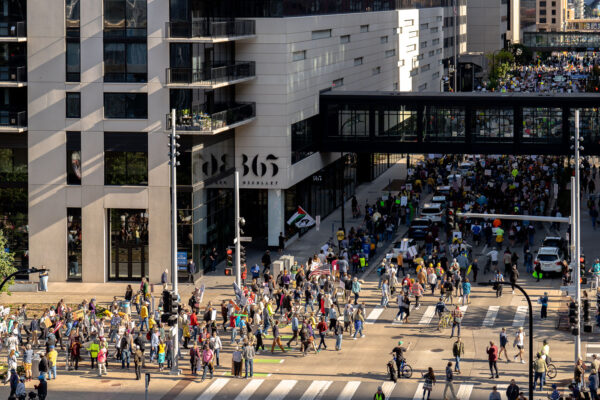
Almost immediately after the shooting, thousands of people took to the streets in Minneapolis. Civil liberties groups, migrant rights organisations, and local activists called for peaceful rallies and nationwide demonstrations against what they describe as the Trump administration’s harsh and militarised immigration enforcement approach. Organisers say more than 1,000 protests are planned across the country, with people demanding accountability and an end to aggressive ICE deployments.
The mayor of Minneapolis, Frey, has demanded that ICE leave the city, saying the agency’s presence is tearing families apart and sowing fear and distrust. He has urged protesters to remain peaceful, stressing that public safety and calm are essential even in the face of outrage. Minnesota’s governor, Tim Walz, has also urged restraint, while local prosecutors are pushing for a transparent and independent investigation into the use of force.
Federal investigations are ongoing, but they have created further tension. The FBI took over the federal probe, removing access to evidence from the Minnesota Bureau of Criminal Apprehension, which angered local leaders who want to ensure a full, fair investigation that includes state input. Critics argue that allowing only federal authorities to control the investigation reduces transparency and accountability in a case involving a federal agent.
The victim, Renee Nicole Good, was more than just a protest observer. Her family and friends describe her as a caring, gentle person who loved her children and worked to support her community. Videos and tributes shared after her death reflect how she was known as a poet and community member, not a violent opponent of law enforcement.
Across the nation, reactions have been mixed along political lines. Some leaders and commentators back the federal government’s claim of self-defense, while some people criticize the use of deadly force and say this shows bigger problems with immigration rules and police method. A range of public figures, including sports figures and entertainers, have spoken out, adding their voices to a growing national conversation about policing, immigration enforcement, and civil rights.
As protests continue and more demonstrations are scheduled for the weekend, the shooting is expected to remain a major topic in U.S. news. Many communities are preparing for rallies that call for justice, accountability, and a reevaluation of federal enforcement strategies. Whether this leads to changes in how ICE operates or broader immigration reform remains to be seen, For now, all attention is on Minneapolis and the strong public reaction after Renee Good’s death.