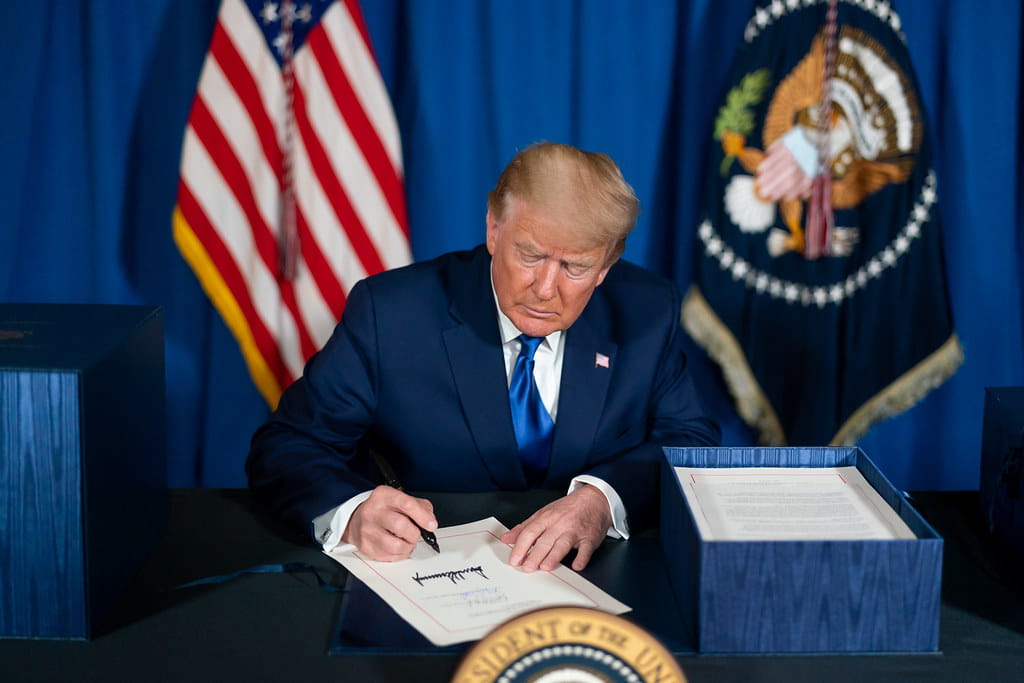
U.S. President Donald Trump has signed a special order to keep Venezuelan oil funds safe in U.S. government accounts. The order, announced on January 10, 2026, is meant to stop courts or companies from taking this money.
Trump and his advisers say this step is part of a larger plan to support peace and stability in Venezuela, as well as to strengthen U.S. foreign policy in the region. The White House said that blocking these funds from being seized helps protect key goals for both Venezuela and the United States.
The money comes from oil sales that were made when Venezuela’s oil industry was running. Venezuela holds one of the largest oil reserves in the world, and its oil has been an important part of its economy for many years. However, oil production has dropped sharply in recent times because of years of trade block, lack of investment, and economic problems.
Trump used laws called the International Emergency Economic Powers Act and the National Emergencies Act to justify the order. These laws let the U.S. president act quickly when there is a serious threat to national security or foreign policy interests. The order calls the Venezuelan oil revenue sovereign property, meaning it belongs to Venezuela as a country, not to private companies or creditors.
This decision came after Trump met with top executives from major U.S. oil companies, including ExxonMobil, Chevron and ConocoPhillips, to encourage them to invest in Venezuela’s oil sector. Trump has been pushing for big investments — up to $100 billion — to help rebuild Venezuela’s oil industry and expand U.S. access to its oil market.
Some company leaders reacted with caution and said Venezuela needs major reforms before big investment can happen. For example, Exxon’s CEO said that Venezuela is not ready for investment without major changes to its laws and economy. But still, Trump insists that U.S. companies will be protected and welcome to work in Venezuelan oil production.
Experts say Trump’s move is significant because it shows how the U.S. is trying to shape Venezuela’s economic future after removing its longtime leader, Nicolás Maduro, from power. Officials want to make sure courts or creditors — like oil companies that are still trying to get back money from old nationalized assets — cannot take the Venezuelan oil funds. These funds are being kept in U.S. accounts for diplomatic and development projects.
Some people say that this step could raise legal questions, especially from companies that have been fighting for years to recover money they say Venezuela owes them. There are also concerns about how the revenue will be used and whether it really leads to better living conditions in Venezuela. Still, the Trump administration says protecting these funds is necessary to support efforts for peace, economic stability, and Stronger relations with nearby countries.
Using this plan, the U.S. is also trying to redirect Venezuelan oil exports to American refineries. A recent plan could send around 30–50 million barrels of Venezuelan crude oil to U.S. markets, helping to balance supply and prices.
Overall, the emergency order adds a new layer of relations between to U.S. and Venezuela. It shows how the U.S. government is using political and economic tools to influence the future of one of the world’s largest oil producers.