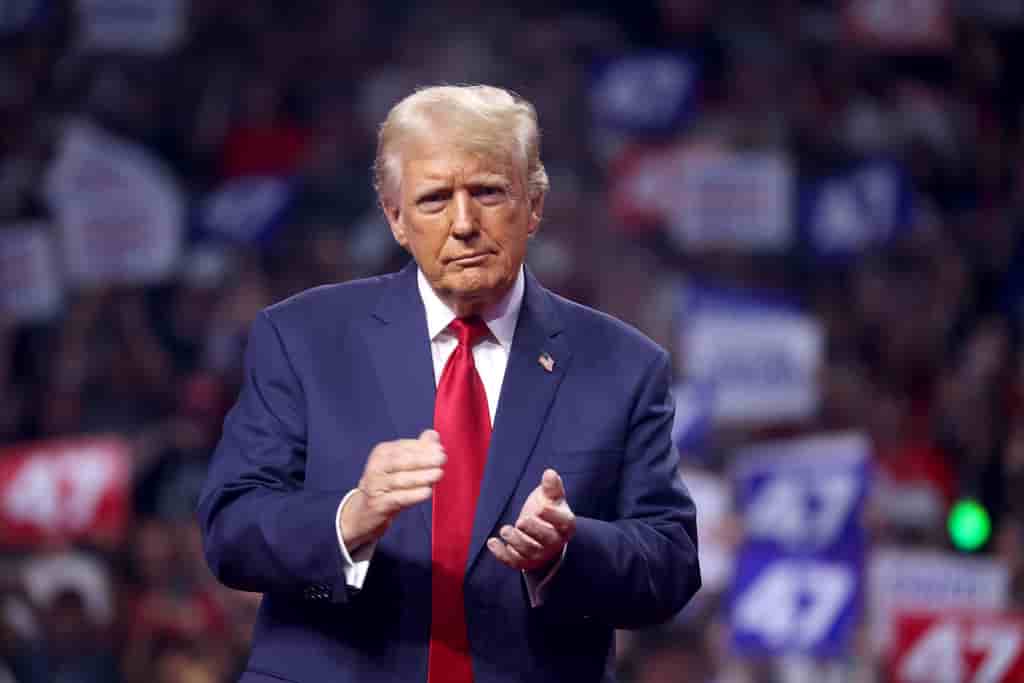
President Donald Trump has caused debate by not inviting two Democratic governors to a special White House event for U.S. governors. This event is usually held each year during the National Governors Association (NGA) winter meeting in Washington, D.C., and it is normally a chance for both Republican and Democratic governors to meet the president and talk about state and federal issues together.
The governors meeting is meant to be a bipartisan tradition, which means it includes leaders from both parties for cooperation and discussion. This year the White House planned to invite only Republican governors, leaving out Democratic governors.
According to reports, two Democratic governors Wes Moore of Maryland and Jared Polis of Colorado were not invited to the traditional White House dinner that is held as part of the NGA meeting. Their offices said they were told they would not receive invitations, and no clear reason was given for this exclusion.
After this news, the National Governors Association said it would no longer hold an official meeting with the president at the White House because the event was planned to include only Republican governors. The NGA’s officials said that the White House meeting lost its traditional bipartisan role and could not continue under those conditions.
In response, 18 Democratic governors announced they would boycott the White House dinner unless all Democratic governors were included. These governors said they would not attend the event in protest of the exclusion of their colleagues.
The two governors who were excluded are both high-profile leaders in their states. Wes Moore, governor of Maryland, also serves as a vice chairman of the NGA. Jared Polis, governor of Colorado, has been in a disagreement with the White House over issues including prison and election matters. Trump publicly criticized both governors, saying he felt they were “not worthy” of attending the meeting, though these criticisms were seen as personal attacks rather than official reasons for exclusion.
Some reports also say there was confusion over which parts of the event were bipartisan. At first, Oklahoma Governor Kevin Stitt, a Republican and the chairman of the NGA, said that all governors were invited to the White House meeting itself, and that the confusion was a misunderstanding. But the formal dinner still did not include Moore and Polis.
The controversy has drawn attention because it breaks a long-term tradition of including governors from both major political parties. Many officials and experts say that excluding leaders because of their political party makes it harder for state and federal leaders to work together for citizens.
Democratic governors who chose to boycott said they wanted to stand together in support of unity and cooperation. Their decision shows the growing political tensions between state leaders and the federal government.
The White House has defended its decision by saying that the president has the right to choose whom he invites to the White House. Even so, many governors from both parties think the meeting should include everyone and have leaders from both sides so they can work together on state problems.
For now, the traditional White House event is no longer part of the NGA’s official program. It is not clear how future meetings will be handled if the same problem happens again. Excluding the Democratic governors is unusual has caused debate about how White House political events should be organized.