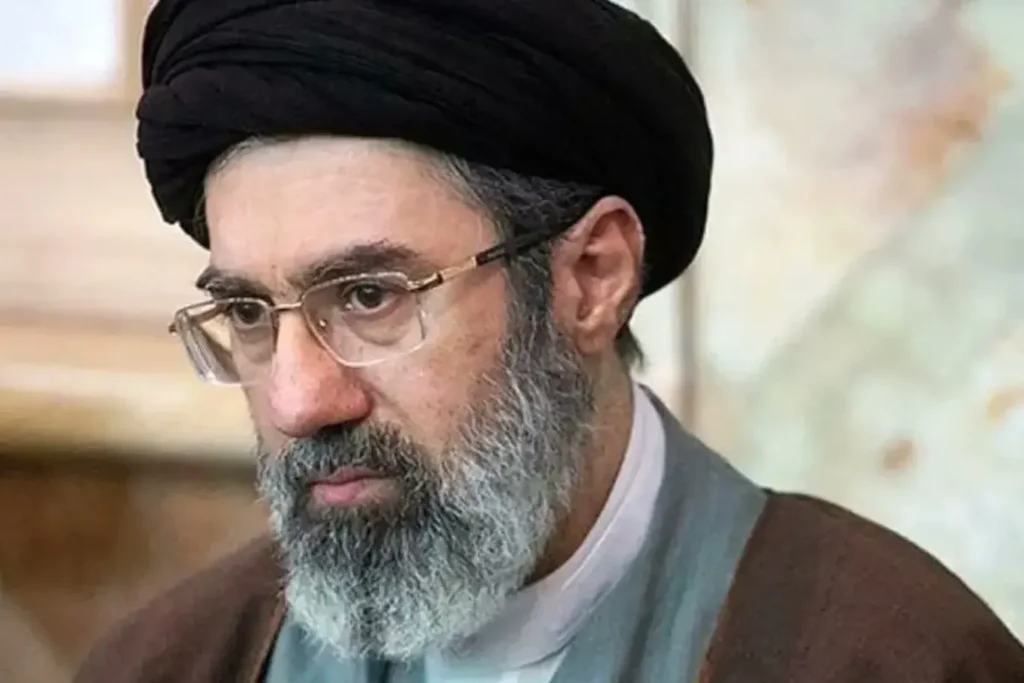
Iran is entering a new political era after reports that Mojtaba Khamenei, the son of former Supreme Leader Ayatollah Ali Khamenei, has been selected as the country’s new supreme leader. Iranian state media reported that the national Assembly of Experts selected him to take over the position after his father’s death.
The position of supreme leader is the highest authority in Iran. The supreme leader has control over the armed forces, major state decisions, and many key institutions in the country. According to Iran’s constitution, the Assembly of Experts, a council of senior religious leaders, is responsible for choosing the supreme leader when the position becomes available.
Ayatollah Ali Khamenei had led Iran since 1989 and was one of the most powerful political and religious figures in the Middle East. He was killed during military strikes linked to the ongoing conflict involving Iran, Israel, and the United States. After his death, an interim leadership council temporarily managed the country’s leadership duties while the Assembly of Experts discussed the next permanent leader.
Mojtaba Khamenei, who is in his mid-50s, has long played a significant role behind the Iranian politics. Over the years he built strong connections with religious institutions and security organizations, including the Islamic Revolutionary Guard Corps. Analysts say he has quietly gained power inside the government for a long time, even though he did not hold a major elected political office.
His possible rise to the country’s top leadership role has attracted attention both inside Iran and internationally. Supporters believe that he can continue the policies of his father and keep the country’s political system stable during a difficult time. But others have criticized the decision because it looks like power is being passed from father to son, which critics say goes against the ideas of the Iranian revolution.
The announcement comes at a tense time for Iran and the countries around it. The region is already facing serious political and military tensions after recent attacks and growing conflict. Several countries in the area are dealing with security concerns, while the situation remains unstable. The arrival of new leadership in Tehran may play an important role in shaping Iran’s future policies and its role in regional affairs.
Mojtaba Khamenei’s leadership could influence many key issues, including Iran’s governments decisions military strategies, and its role in regional conflicts. Experts believe the transition of power will be an important moment for Iran’s political system as the country moves into a new phase of leadership.