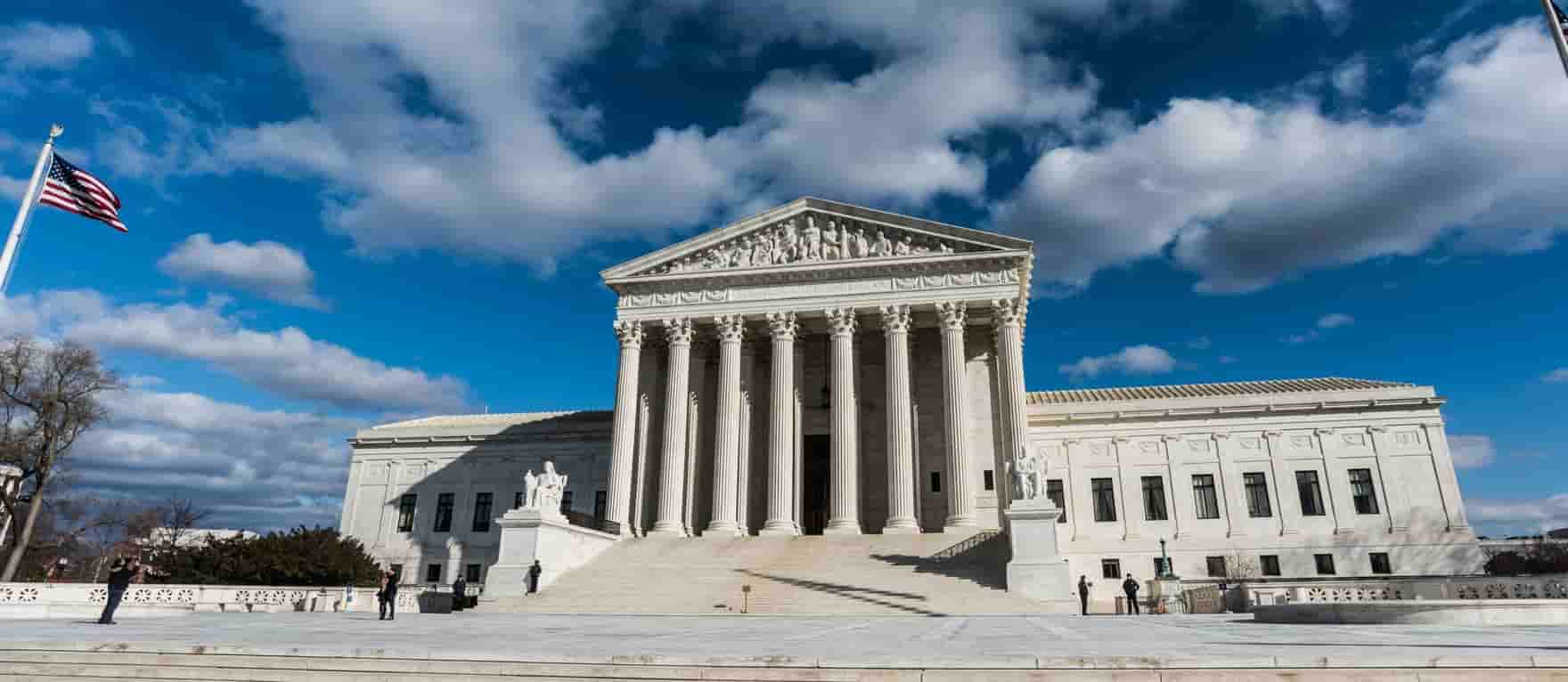
The United States Supreme Court made a big decision on Friday, February 20, 2026. The Court said that President Donald Trump did not have the legal power to impose large tariffs on products from almost every country. The tariffs were part of Trump’s trade policy. The Court’s decision was 6-3, which means six judges agreed and three disagreed.
Tariffs are taxes that are charged on imported products when they come into the country. Trump used a law from 1977 called the International Emergency Economic Powers Act (IEEPA) to justify the tariffs. He said the tariffs were needed because of trade problems and other issues. But the Supreme Court said that the law does not give the president the power to put these kinds of tariffs on imports. According to the Constitution, only Congress has the power to make tax rules like tariffs, and the president cannot do this alone.
This decision was given by Chief Justice John Roberts. He said that the law used by Trump did not clearly allow the president to impose these type of large tariffs without approval from Congress. This decision means that many of the tariffs Trump imposed under that emergency law are no longer valid.
Three justices, Samuel Alito, Clarence Thomas, and Brett Kavanaugh, did not agree with this decision. They said the tariffs were lawful and that the law should allow the president to use them. But their opinion did not get enough support to become the final decision.
This decision is a serious legal problem to Trump’s trade policy. These tariffs affected products from countries around the world including China, Mexico, and Canada. These tariffs earned billions of dollars in revenue for the U.S. government. After this decision, companies that paid these tariffs may demand refunds, though the Supreme Court did not said how these refunds will be given.
Trump used this emergency law and imposed these tariffs to improve America’s trade position, but constitution did not allow him to use this power. Lower courts had already declared many of these tariffs illegal before the case reached the Supreme Court. The Supreme Court’s decision makes it clear that the president cannot impose these kinds of tariffs without approval from Congress.
This court’s decision could affect the global economy and trade around the world. Over the past year, many businesses and countries had to adjust because the tariffs changed the cost of exports. Now, companies that paid high tariffs might ask the government to return their money back, but getting these refunds could take a long time and be difficult.
This case also highlights the limits on presidential power. Even though most of the justices on the Court are conservative, they decided that the president did not have the legal power to do this. The decision makes it clear that Congress must give clear approval for any big taxes on imports.
This Supreme Court’s decision means that most of the tariffs imposed by Trump using the emergency law are no longer allowed. However, some other tariffs that were imposed under different laws are still active. This decision ends the use of this emergency law for global tariffs, but future presidents could still impose new tariffs under other laws.