The United States government has announced a new 25 percent tariff on certain advanced computer chips, including Nvidia’s H200 artificial intelligence (AI) chips, that are planned to be exported to China. The tariff is part of a plan by the government to protect U.S. technology and improve national security.
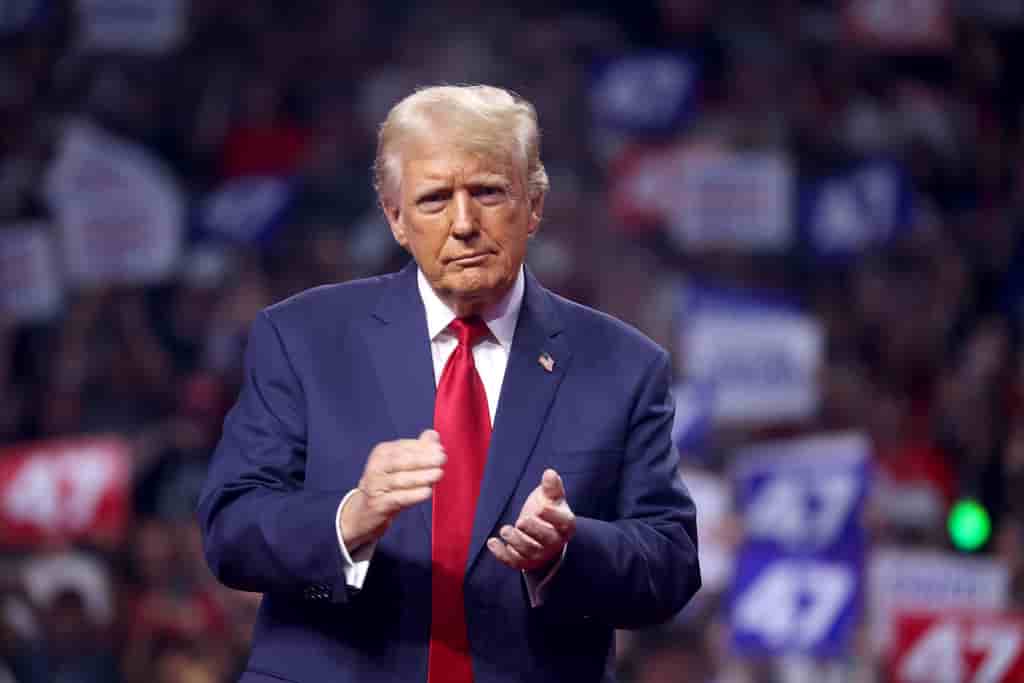
Under the new rule signed by President Donald Trump, the tariff applies to advanced chips that are made outside the United States and then pass through the U.S. before being exported to other countries like China. This includes chips from Nvidia and similar products from other companies such as AMD’s MI325X.
The tariff decision came after months of talks and reviews about how much the U.S. depends on chips made in other countries, especially for high-end AI chips. These chips power machine learning, data centers, and many modern AI tools. By imposing a 25 percent tariff on exports of these chips, the U.S. government expects to earn revenue while keeping stronger control over advanced technology.
Nvidia, a top maker of AI processors, welcomed the move as a balanced approach that allows the company to sell its advanced chips to customers in China. A company spokesperson said the decision would help American industry compete globally and support U.S. jobs and manufacturing market.
The tariff does not apply to chips that are imported into the United States and used locally. For example, chips meant for U.S. data centers, startups, and public-sector applications are free from the new tax. The government also said that chips used for building U.S. technology infrastructure will not be subject to the tariff.
The policy aims to reduce America’s dependency on foreign sources for advanced chips. Today, the U.S. makes only a small portion of the world’s most advanced semiconductors, creating economic and security risks. Officials hope that the tariff will encourage companies to invest more in U.S. chip manufacturing and research.
The tariff announcement has caused a range of responses from business and technology communities. Some experts say that charging a tariff while allowing the export of powerful chips could help balance national security with commercial interests. Others have expressed concern that the policy might still give China access to advanced computing power that could be used to improve its own technology industry.
This move also reflects the ongoing competition between the United States and China in artificial intelligence and technology leadership. For years, U.S. policy focused on limiting the export of top-level chips to China to prevent powerful AI technologies. The new tariff approach represents a shift toward a regulated trade model rather than a complete ban.
The tariffs were announced after a review under Section 232 of the Trade Expansion Act of 1962, a law that allows the president to impose tariffs for national security reasons. The goal is to strengthen the American semiconductor supply chain by making foreign imports less financially attractive and encouraging local production.
Nvidia’s H200 is one of the company’s most powerful AI chips used for large-scale computing tasks. It is not as advanced as the upcoming Blackwell models, but it still plays a major role in data centers and AI research. Allowing these chips to be sold to China marks a significant moment in U.S.–China technology relations.
The new tariff system may also adapt with larger actions targeting other chip products and related technology components. Policymakers have hinted that this could be only the first phase of a more comprehensive strategy to protect U.S. tech interests while maintaining access to global markets.
The tariff will start soon and will shape how American chipmakers and foreign buyers trade advanced semiconductor products in the coming years. Decisions by China on how to regulate or respond to these tariffs will also influence future global technology trade relations.